
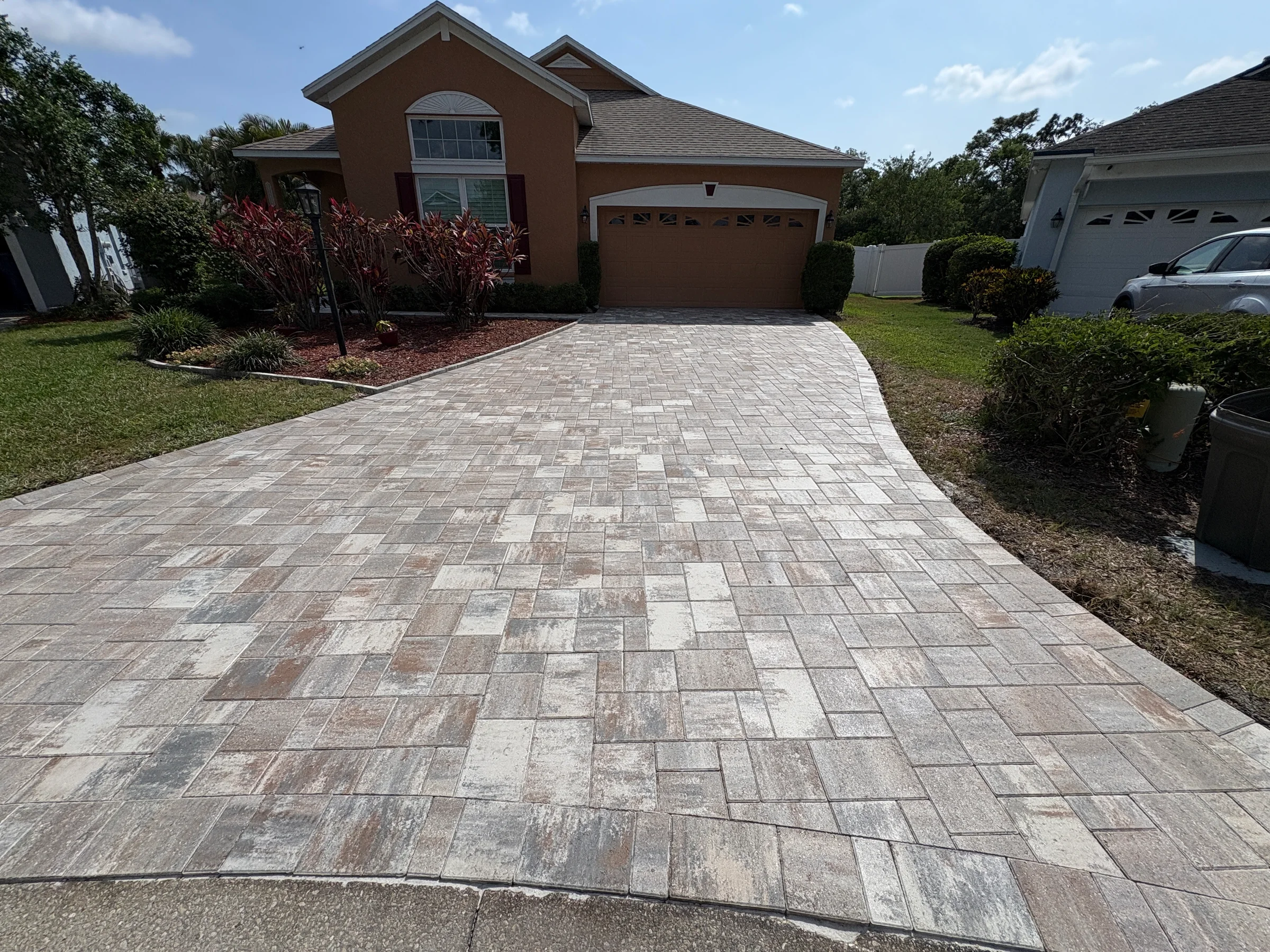
A driveway estimate should answer more than which paver color you like. Before booking, Lakewood Ranch homeowners need to understand the removal and preparation scope, how water will move, which approvals may apply, and what ownership looks like after installation. These are the questions that make proposals easier to compare and surprises less likely.
What determines the price of a paver driveway?
Square footage is only the starting point. Demolition and hauling, excavation, the condition below the existing surface, base preparation, grade changes, drainage details, access for equipment, paver selection, pattern, borders, cuts, edge restraint, and joint material can all change the scope. A curved apron, walkway connection, utility cover, or tight side access can matter even when two driveways have similar dimensions.
That is why a responsible answer to “What does a 20-by-20 paver driveway cost?” begins with the property. Use the measurement to start a conversation, but compare written project scopes rather than applying one online price to every home. Ask what is included, what could change after removal, and how any added work would be approved.
What should be addressed below the visible pavers?
The finished pattern is the part you see; the supporting assembly is what helps it carry daily vehicle traffic. A proposal should explain the anticipated removal, excavation, base and setting-bed work, compaction, edges, cuts, and joints for the actual site. Existing cracks, low areas, moving edges, or standing water are useful clues to document before the site visit.
Also look at the garage threshold, street or sidewalk connection, landscape edges, and the places where tires turn. Those transitions concentrate detail work. The goal is not a generic promise about one universal base depth—it is a scope that responds to the driveway, product, soil conditions, drainage, and applicable requirements.
Are pavers cheaper than concrete in Florida?
Sometimes one complete proposal is lower than another, but the surface label alone does not decide the answer. Pavers and poured concrete use different materials, labor, preparation, detailing, and repair approaches. Demolition, access, grade correction, borders, reinforcement or restraints, and finish choices can move either proposal.
Compare the same boundaries and responsibilities: removal and disposal, site preparation, drainage, transitions, permits or approvals, cleanup, and care guidance. Pavers offer modular repair possibilities and broad pattern and border choices, while concrete creates a continuous poured surface. The better value is the complete system that fits the property, design priorities, maintenance expectations, and budget.
Which Lakewood Ranch details should be checked first?
Drainage deserves an early conversation. Florida downpours can quickly reveal a low spot, blocked route, or grade that sends water toward the garage. Note where runoff travels now, whether water collects after rain, and how the driveway meets the street, sidewalk, drains, and adjoining landscape. The finished plan should work with the property's lawful drainage path rather than pushing a problem elsewhere.
Community design review and government requirements are separate questions, and the answer can vary by address. Before scheduling work, check the documents for your association or neighborhood and confirm which jurisdiction handles the property. Paver style, border color, apron changes, drainage work, or work near a sidewalk or right-of-way may need review. Do not assume a nearby project followed the same rules.
How long does the process take, and what can affect scheduling?
The useful timeline has at least two parts: planning before installation and work on site. Material availability, sample or color approval, community review, permitting when applicable, utility coordination, access, demolition, weather, and the size or complexity of the driveway can all affect the calendar. A start date without those dependencies is not the same as a complete schedule.
Before booking, ask when final selections are due, who is responsible for approvals, how vehicles and deliveries will be handled, and what conditions could change the sequence. Keep the agreed scope, selections, payment schedule, and change process in writing so everyone is working from the same plan.
What maintenance should homeowners expect?
Paver driveways are not maintenance-free. Routine sweeping, prompt attention to oil or organic stains, vegetation control, joint upkeep, and periodic checks for edge movement or settlement help preserve the surface. Cleaning products and methods should match the selected paver and joint system; aggressive washing can disturb joints or damage a finish.
Sealing is a product and condition decision, not an automatic answer for every new driveway. Ask what the paver manufacturer and joint-material guidance recommend, what appearance a sealer may create, and how future cleaning or reapplication would be handled. Clear care instructions should arrive with the finished project—not as an afterthought.
Quick answers
Lakewood Ranch paver driveway FAQs
How much does a 20-by-20 paver driveway cost in Lakewood Ranch?
There is no reliable one-price answer from dimensions alone. Removal, excavation, base conditions, drainage, access, paver choice, pattern, borders, cuts, edge restraint, and approvals can all affect the estimate. Compare written scopes based on a site evaluation.
Is a paver driveway cheaper than concrete in Florida?
Not always. The comparison depends on the complete scope for each system, including demolition, preparation, drainage, materials, detailing, access, cleanup, and long-term maintenance. Compare equivalent proposals rather than surface prices alone.
Do I need HOA approval or a permit for a paver driveway in Lakewood Ranch?
Requirements can vary by property, community, scope, and jurisdiction. Check your association or neighborhood documents and confirm applicable government requirements before work is scheduled, especially for apron, drainage, sidewalk, or right-of-way changes.
What should a paver driveway estimate include?
A useful estimate should define the project area, removal and disposal, preparation, anticipated base and setting-bed work, pavers and pattern, borders and cuts, edge restraint, joints, transitions, drainage details, cleanup, and how changes will be handled.
How long does paver driveway installation take?
Timing depends on project size and complexity, material availability, access, demolition, approvals, weather, and site conditions. Ask for both the pre-installation planning timeline and the anticipated on-site sequence for your specific property.
How much maintenance does a paver driveway need?
Expect routine sweeping, prompt stain care, vegetation and joint upkeep, and occasional checks for edge movement or settlement. Follow guidance for the exact paver and joint system before cleaning, pressure washing, or sealing.