
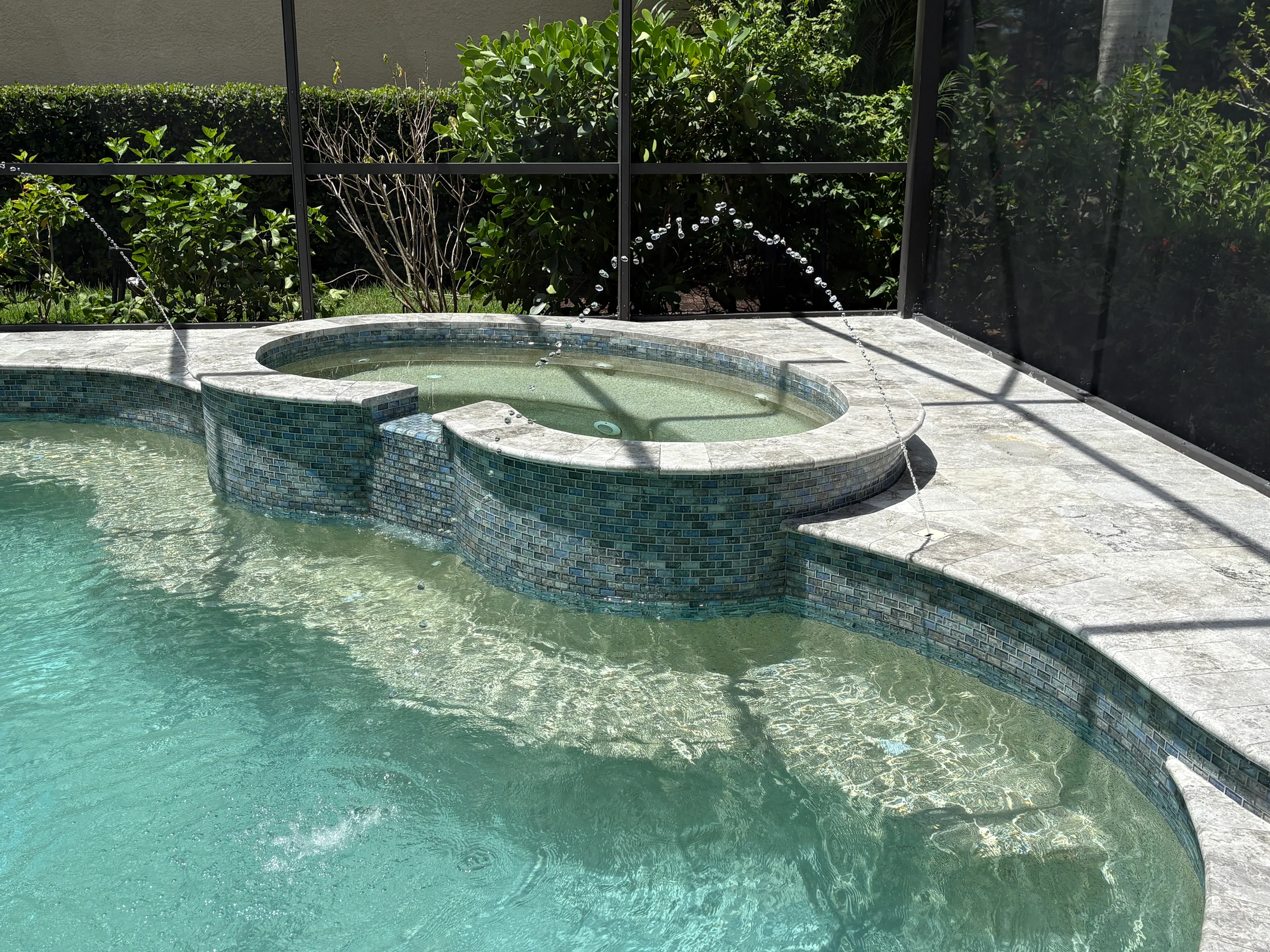
A Lakewood Ranch pool deck has to do more than frame the water. It shapes how the space feels underfoot, how people move between the home and pool, how splash-out and heavy rain reach drains, and how the deck meets lanai doors, coping, landscaping, and a screen enclosure. Concrete pavers, travertine, and marble can each create a polished Florida pool deck, but the right choice depends on the exact product, finish, property conditions, care expectations, and complete installation plan.
Surface comparison
Concrete pavers, travertine, and marble at a glance
| Pool deck surface | Visual character | Plan for | Care |
|---|---|---|---|
| Concrete pavers | Broad choices in color, size, texture, pattern, borders, and coordinated coping. | Confirm the product and finish for pool-deck use, plus base, drainage, joints, edges, cuts, and coping transitions. | Sweep, clean spills promptly, manage joints and vegetation, and follow product guidance for washing or sealing. |
| Travertine | Natural variation, warm neutral tones, and an organic surface that suits relaxed pool settings. | Review representative stone, finish, thickness, wet-use suitability, voids, coping, drainage, and the complete assembly. | Use stone-compatible cleaning methods and understand stain, joint, sealing, and finish-specific maintenance before selecting it. |
| Marble | Bright, refined natural stone with distinctive veining and tonal movement from piece to piece. | Verify the exact exterior finish, representative color range, wet-use suitability, coping details, drainage, and installation system. | Plan for stone-appropriate cleaners, prompt stain care, and product-specific guidance on washing, sealing, and long-term appearance. |
Choose paver pool decks around how the space is used
List the routes people use every day: the lanai door to the water, shallow steps, spa access, outdoor shower, equipment area, furniture zones, and any gate to the yard. A surface that looks beautiful in one photograph still has to fit wet-foot traffic, chairs, umbrellas, pool maintenance, and the places where children or guests change direction.
No pool-deck material should be treated as slip-proof. Compare the exact product and finish under conditions that reflect its intended use, and discuss how texture, slope, drainage, cleaning, and wear work together. A small dry showroom sample cannot answer every question about a full deck beside water.
Compare pool deck heat, color, and wet-use finish
Florida sun can make surface temperature an important comfort question, but material names and color labels are only rough clues. Shade, time of day, surface color, texture, density, and the specific product all influence what a deck feels like. Place representative samples outdoors and compare them at the time of day when the pool is used most.
View enough pieces to understand the color range, especially with natural stone. Travertine and marble vary by nature; concrete paver blends can vary as well. The goal is not to make every unit identical, but to confirm that the overall range works with the home, coping, waterline tile, enclosure frame, and landscape.
Plan pool deck pavers from the coping outward
Coping establishes the edge at the pool, but the entire perimeter needs one connected layout. Skimmer lids, drains, steps, screen-enclosure posts, door thresholds, movement details, equipment access, and landscape borders all interrupt the field. Ask how the pattern and cuts will meet each one before the material order is finalized.
On a replacement project, the condition below the existing surface may affect removal and preparation. On a new pool, sequencing matters because the shell, coping, deck, drainage, enclosure, and equipment routes share tight boundaries. A clear written scope should identify the deck limits, supporting assembly, edges, joints, transitions, cleanup, and process for concealed conditions or changes.
Plan drainage for a Lakewood Ranch pool deck
Pool water, roof runoff, cleaning water, and strong Florida rain can all reach the deck. Note where water collects now, where drains sit, whether downspouts discharge nearby, and how the deck meets doors, planting beds, the yard, and any screen-enclosure track. Photos taken after a storm can help document a problem that is not visible on a dry estimate day.
Surface texture and joint design do not replace deliberate grade and drainage. Ask which drainage work is included, how the selected surface meets drain bodies and coping, and which wider property conditions would need separate evaluation. Those answers make it easier to compare proposals that may use similar-looking materials but very different scopes.
Compare concrete pavers, travertine, and marble
Concrete pavers offer the broadest range of coordinated sizes, colors, patterns, and borders. They can support a tailored layout around curves and transitions, and their modular format may allow a limited area to be lifted for certain repairs. Product suitability, finish, color range, joints, edge restraint, and the supporting installation still need to match the pool environment.
Travertine brings warmer natural variation, while marble can create a lighter, more refined setting. Both require selection by the actual product and finish rather than by stone name alone. Review representative pieces, confirm intended exterior wet-area use, and understand natural variation, staining considerations, cleaning methods, joint details, and any sealing guidance before deciding.
Compare complete pool deck estimates—not square-foot rates
Deck size is a useful starting point, but demolition, disposal, access, existing conditions, preparation, drainage, material selection, coping, pattern, curves, borders, cuts, steps, enclosure interfaces, approvals, and cleanup can all change the project. Natural-stone range and availability can also affect the order and schedule.
Compare complete written scopes rather than isolated per-square-foot figures. Each proposal should make the project limits, removal, preparation, selected surface, coping responsibilities, joints, edges, transitions, drainage work, cleanup, care guidance, schedule dependencies, and change process understandable.
Match the paver surface to realistic maintenance
Leaves, sunscreen, food, metals, irrigation, and pool chemicals can all leave marks if residue sits on a surface. Routine sweeping, prompt spill care, open drainage paths, joint maintenance, and periodic checks at coping, drains, edges, and enclosure posts help protect the finished setting. Cleaning products should suit the exact paver or stone and the joint system.
Pressure washing and sealing are not universal answers. Aggressive washing can disturb joints or affect a finish, while a sealer can change color, sheen, traction, and future maintenance. Ask what the manufacturer or stone supplier recommends and what any proposed treatment is intended to accomplish before it is applied.
Quick answers
Paver pool deck FAQs for Lakewood Ranch homeowners
What is the best material for a pool deck in Florida?
There is no single best surface for every property. Compare concrete pavers, travertine, and marble by the exact product and finish, wet-use suitability, outdoor sample appearance, comfort, drainage, installation scope, care expectations, and budget.
What type of pavers are best for a pool deck?
The best fit is a specific product and finish intended for the exterior pool setting. Compare texture, color, format, coping compatibility, manufacturer guidance, installation details, and maintenance rather than choosing from the broad word “paver” alone.
Which pool deck material stays coolest in the Florida sun?
Surface temperature varies with the exact product, color, texture, density, shade, and time of day. Compare representative samples outdoors when the pool is normally used rather than relying on a material name or color label alone.
Are pool deck pavers slippery when wet?
No pool deck should be described as slip-proof. Wet-use performance depends on the exact product and finish as well as slope, drainage, cleaning, wear, and site conditions. Review the selected surface for its intended application before ordering.
Is travertine or marble better for a pool deck?
Both can suit an exterior pool setting when the exact product and finish are appropriate. Travertine typically brings warm natural variation; marble often creates a brighter, more refined look. Compare representative stone, finish, care, availability, installation details, and total scope.
Is it cheaper to pour concrete or install pavers in Florida?
Not in every case. Demolition, access, preparation, grade and drainage work, the selected finish or paver, curves, coping, steps, transitions, cleanup, and future repair expectations can change the complete price for either system.
Is it better to have pavers or concrete around a pool?
Pavers provide a modular surface with broad pattern and border flexibility; poured concrete creates a continuous surface with its own finish and joint decisions. Compare the complete installation, pool geometry, drainage, appearance, care, repair approach, and budget for the property.
Should a Florida pool deck be sealed?
Sealing is product- and condition-specific. It can affect appearance, traction, stain response, and future maintenance. Follow guidance for the exact surface and joint system, and understand the purpose and reapplication expectations before using a sealer.
What should a pool deck estimate include?
Look for defined deck limits, removal and disposal, preparation, the specified material and finish, coping responsibilities, pattern and cuts, joints and edges, steps and transitions, drainage work, cleanup, care guidance, schedule dependencies, and a written change process.